
Marine Construction Guide | Lee County
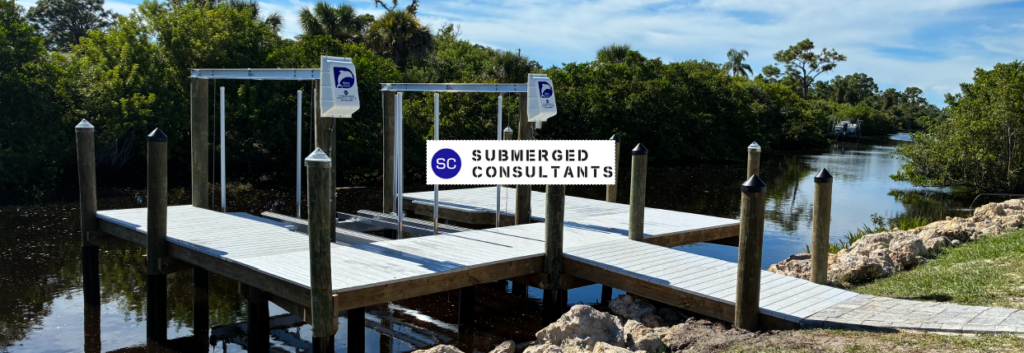
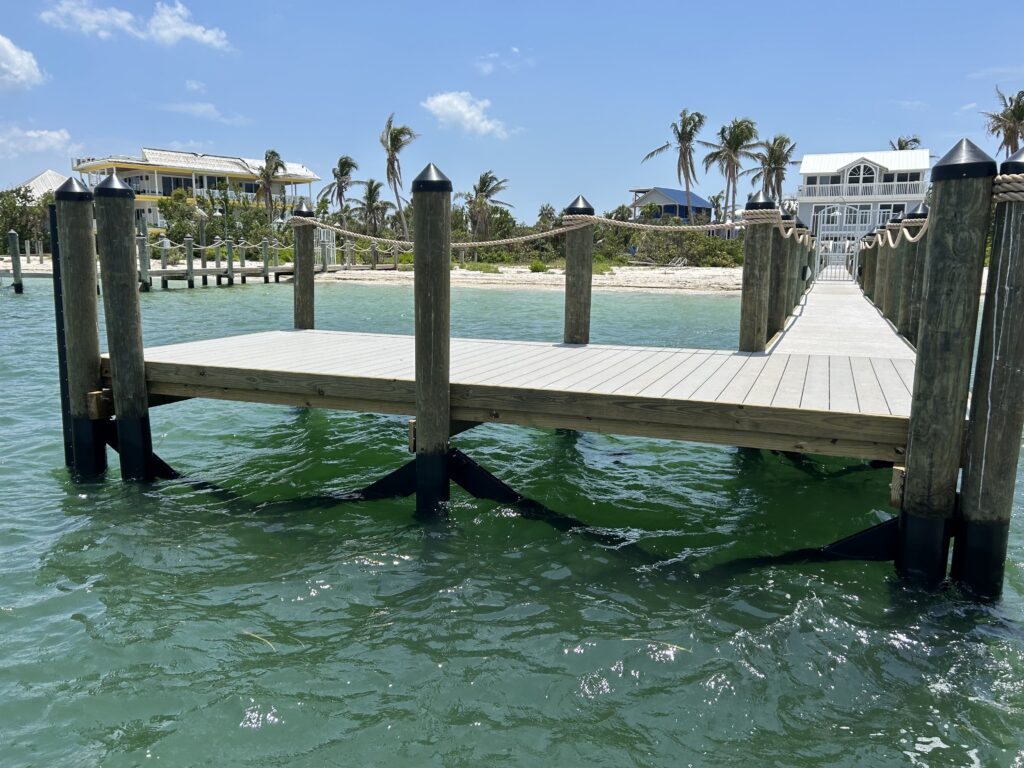
Waterfront property in Lee County can support much more than a basic wooden dock. In fact, depending on the location, shoreline, water depth and applicable regulations, homeowners may be able to build a custom dock, install boat lifts, add a covered boat-storage area, construct a fishing platform or improve the shoreline with a seawall or riprap.
However, the possibilities vary for every property. For example, a design that works on a wide riverfront lot may not fit a narrow residential canal. In addition, two neighboring properties can have different restrictions because of lot shape, shoreline vegetation, existing structures or water depth.
Therefore, before selecting a dock layout, homeowners should first determine what the property can physically and legally support.
Begin With the Property
To start, a waterfront feasibility review should consider:
- Whether the property is in unincorporated Lee County or a municipality
- Shoreline width and property-line configuration
- Canal, lake, river or waterbody width
- Natural versus man-made waterbody classification
- Vessel dimensions and intended waterfront use
- Water depth at low water
- Riparian boundaries
- Existing docks, seawalls and boat lifts
- Mangroves, seagrass and other environmental resources
- Flood-zone and regulatory-floodway conditions
- Vessel dimensions and intended waterfront use
In addition, Lee County requires dock and shoreline permit plans to show property boundaries, shoreline width, waterbody width, vegetation, existing structures, proposed setbacks and the distance that the project extends into the water. Designers must also show mean-low-water depth for proposed slips in natural waterbodies.
As a result, this information defines the practical building area before any dock design begins.
Possible Waterfront Improvements
A residential waterfront plan may include several different improvements, depending on site conditions.
Custom Fixed Docks
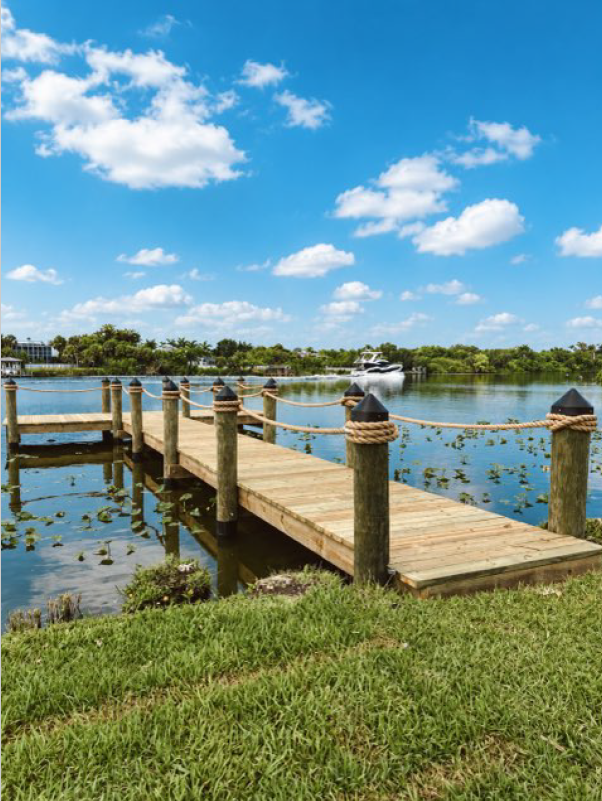
Fixed docks use pilings driven into the substrate for support. Because of this, they can support access walkways, terminal platforms, finger piers, boat lifts, seating areas and utilities.
Marginal Docks
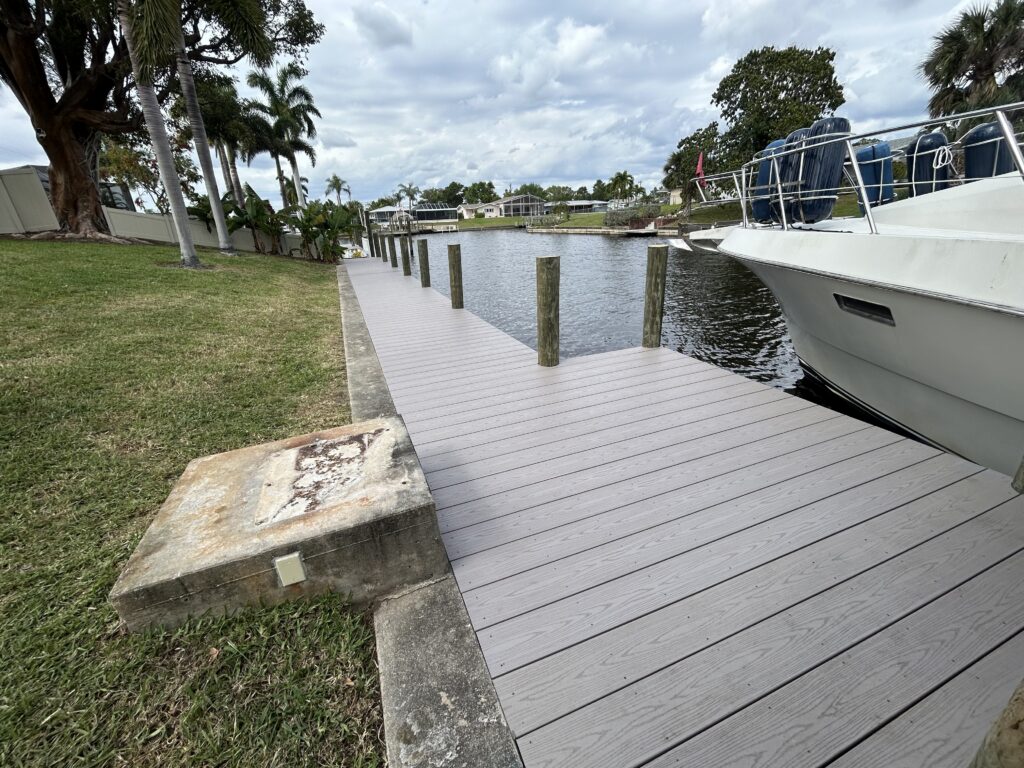
A marginal dock runs parallel to the shoreline or seawall. As a result, this configuration can provide boarding access without extending deeply into a narrow canal.
Floating Docks
Floating docks rise and fall with changing water levels. Therefore, they often work well for kayaks, paddleboards, personal watercraft and lower boarding access.
Boat and Personal-watercraft lifts
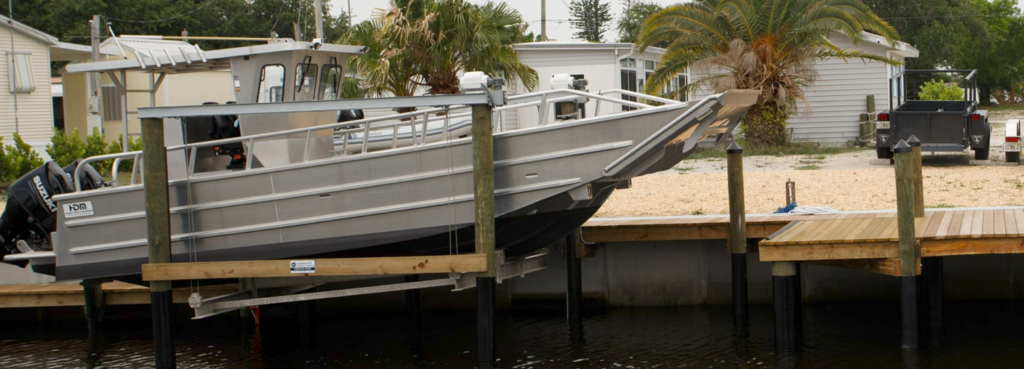
A property may support conventional four-piling lifts, elevator-style lifts or personal-watercraft lifts. However, the final selection always depends on the vessel and site conditions.
Boathouses and dock pavilions
Roofed structures can provide vessel protection or shaded seating areas. However, designers must include their size, height, setbacks and structural requirements in the original plan.
Seawalls and shoreline stabilization
Seawalls, riprap revetments, retaining walls and erosion-control improvements protect the shoreline. In turn, they help support long-term waterfront use.
Fishing piers and boardwalks
In some cases, properties along lakes, rivers, wetlands or mangrove shorelines are better suited for fishing piers, observation platforms or elevated boardwalks instead of traditional boat docks.
Overall, Lee County’s dock and shoreline permit category includes docks, boat lifts, ramps, davits, boathouses, fishing piers, observation decks, boardwalks, floating docks, mooring pilings, seawalls, riprap, dune walkovers and other erosion-control structures.
Jurisdiction Matters
Lee County Community Development primarily regulates projects in unincorporated Lee County. Properties in Cape Coral, Fort Myers, Bonita Springs, Estero, Sanibel and Fort Myers Beach are normally reviewed by their respective municipal permitting departments.
Municipal regulations can differ from county rules. A dock that would be acceptable in unincorporated Lee County may require a different layout inside Cape Coral or Fort Myers.
Design the Waterfront as One System
Instead of designing each feature separately, homeowners should treat the dock, lift, seawall and vessel as one connected system.
For example, boat-lift pilings may affect future seawall work. Likewise, a boathouse roof changes structural loads, and water depth determines lift placement. In addition, electrical service must coordinate with framing and decking.
Submerged Consultants designs, builds, repairs and maintains docks, boat lifts, seawalls, boardwalks and other marine structures throughout Lee County and Southwest Florida. As a result, the full waterfront system can be evaluated together rather than as separate improvements.